Real Shilajit vs Fake Shilajit — 2026 Buyer’s Guide
Introduction
The proliferation of counterfeit and diluted shilajit products reflects a market where demand has outpaced verification. Superficial characteristics—dark coloration, viscous texture, or “mineral-rich” labeling—are frequently mistaken for indicators of authenticity, despite offering no meaningful assurance of composition or safety.
A credible evaluation requires a disciplined approach grounded in traceable sourcing, clearly defined purification processes, and independent laboratory documentation. This guide establishes an evidence-first framework designed to distinguish authentic shilajit from imitations, emphasizing verifiable criteria over visual or sensory impressions.
Why Fake Shilajit Is So Common in the Market
The market invites confusion. Rising demand for resin products, low entry barriers for online sellers, and the ease of blending syrups, extracts, or inert fillers into a tar-like paste create fertile ground for counterfeits. Labels often overpromise, while verification is difficult for most consumers. Advertising norms require substantiation and accurate labeling, yet enforcement varies; the U.S. Food and Drug Administration outlines how supplements must be labeled and identified, including clear ingredient naming and Supplement Facts panels, while the Federal Trade Commission requires truthful, evidence-backed advertising claims. See the FDA’s overview of dietary supplements and structure/function claims guidance, as well as the FTC’s Health Products Compliance Guidance for the standards marketers must meet (FDA dietary supplements; FDA structure/function claims; FTC advertising substantiation). Independent testing has also shown variability in composition among marketed shilajit products, underscoring why documentation matters more than appearance; ConsumerLab’s category testing highlights inconsistencies in fulvic content and potential exposure risks that DIY checks cannot catch (ConsumerLab market findings).
Several marketplace dynamics exacerbate the problem. Batch-lot traceability is often missing on product pages, making it impossible to match a jar to a specific Certificate of Analysis (COA). Return policies on large e_commerce platforms can enable product substitution or relabeling without consequence, eroding trust. Meanwhile, regulatory frameworks differ across jurisdictions; a claim that is restricted in one market may appear on a global listing shipped elsewhere. The net effect is a high volume of lookalike listings where buyers cannot easily validate sourcing, purification, or testing. In such conditions, appearance-based checks spread quickly across social media despite offering minimal protection.
What Real Shilajit Actually Is
Authentic shilajit is a natural mineral_organic exudate formed over long timescales in high mountain ranges, classically associated with the Himalayas. It contains fulvic and humic acids, a spectrum of trace minerals, and compounds such as dibenzo_α_pyrones. Peer_reviewed reviews describe shilajit as a complex phytomineral matrix produced by humification and microbial action in specific geological conditions (composition and origin review). In practice, genuine products present as a resin that softens with warmth and can be dissolved for use in warm water, though clinical and traditional preparation practices vary (clinical warm water administration example). Statutory pharmacopeial systems, such as the Ayurvedic Pharmacopoeia of India, include identity and purity monographs for Shilajit, which frame classical identification while modern safety relies on contemporary analytical testing (API volumes overview: API Vol. 1; API Vol. 4). Real shilajit is not merely any black paste or capsule labeled “mineral rich”; it is a specific resinous material whose composition and safety can be documented.
What Fake Shilajit Usually Looks Like
Counterfeit or low-quality products exploit visual similarity. Common patterns include:
A: Tar-like imitations based on industrial pitch.
B: Sugar-heavy or molasses_like pastes that taste sweet rather than earthy_bitter.
C: Diluted resins cut with syrups, gums, or inert powders to mimic consistency.
D: Powders repackaged as “resin” or “drops” without disclosing extract ratios or excipients.
E: Products touting generic origin claims (e.g., “Himalayan source”) with no altitude, region, or supplier traceability.
Some counterfeits pass superficial home checks but still contain elevated heavy metals or negligible fulvic content, which only laboratory analysis can reveal. In short, look and feel can be imitated; authentic composition and clean safety profiles require documentation.
Real Shilajit vs Fake Shilajit: Key Differences That Matter
Below is a compact comparison to prioritize decisive evidence over appearances.
| Dimension | Real shilajit typical signal | Fake/low_quality typical signal | How to verify |
| Third-party testing & COA (batch) | Public or on_request batch COA; ISO/IEC 17025 lab named (e.g., Eurofins/SGS) | No COA, aggregated “lab tested” claim, non_accredited lab | Request batch COA; confirm ISO/IEC 17025; methods listed (ICP_MS; USP <61>/<62>; FTIR/HPLC) |
| Heavy metals & contaminants | ICP_MS results for Pb/As/Hg/Cd within recognized limits (context via USP <2232>, WHO/EU ranges; Prop 65 dose logic) | Metals unreported or above norms; missing micro panel | Check ppm vs declared serving; ensure microbial panel meets USP <61>/<62>/<1111> |
| Fulvic acids content | Fulvic % reported with the method (gravimetric or validated HPLC/FTIR) plus mineral spectrum | No fulvic % or questionable methodology; spiked extracts without fingerprint | Confirm method; Look for FTIR/HPLC fingerprint plus ICP_MS mineral panel |
| Source region & altitude disclosure | Specific region, altitude band, supplier traceability | Vague “Himalayan” claim with no details | Look for sourcing page, batch/lot trace, documentation or audits |
| Purification process | Described low_heat purification/filtration; rationale for metals/microbe control | “Pure” claim without process detail | Ask for SOP summary; confirm post_purification COA |
| Label transparency | Clear “shilajit resin” or defined extract; serving facts; ingredient list precise | Ambiguous names; blends; miracle claims | Compare label and website; watch for disease claims (non_compliant) |
| Form factor risk | Resin allows visual/sensory checks; liquids/capsules acceptable with strong COA | Powders/capsules with hidden excipients; “resin-like” syrups | Prefer formats with batch COA and disclosed excipients |
| Physical behavior (texture/thermal) | Thermoplastic: hardens when cold, softens with warmth | Erratic behavior; overly sticky at all temps | Treat as indicative only; rely on lab COA |
| Solubility in warm water | Dissolves uniformly to brown_gold solution; minimal residue | Foams excessively, leaves gummy residue | Observation helps, but confirm with lab data |
| Odor & taste | Earthy, bituminous, bitter/savory; no artificial sweetness | Chemical or sugary notes; perfumed | Sensory is subjective; not decisive evidence |
Most decisive evidence = batch-linked COA + accredited lab methods + source traceability.
Texture and Consistency
Real resin typically shows thermoplastic behavior: it hardens in the cold and softens with gentle warmth. This property aligns with its mineral_organic matrix. However, counterfeiters can tune viscosity with syrups and gums to mimic these cues. Treat texture as a preliminary observation, never a verdict. The decisive step is obtaining a batch COA naming an ISO/IEC 17025_accredited lab and listing methods.
Solubility in Warm Water
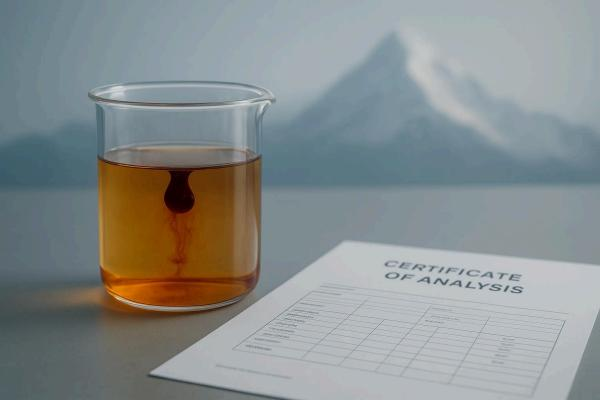
Authentic resin generally dissolves evenly in warm water into a brown to golden solution, a preparation reflected in clinical and traditional use. Yet uniform dissolution does not establish safety; contaminated products can still dissolve cleanly. Only ICP_MS panels for metals and microbial tests confirm risk profiles. Use dissolution as a quick observation, then verify with documentation (clinical warm water administration example).
Smell and Taste
Sensory cues—earthy or bituminous aroma, distinct bitterness—are suggestive but subjective and easy to manipulate with flavors or sweeteners. Counterfeits sometimes lean sweet to mask bitterness. Consider sensory feedback as weak evidence and corroborate with lab reports and sourcing documentation.
Color and Appearance
Color ranges from deep brown to near_black, sometimes with a subtle bronze sheen when thinly spread. Color is unreliable as a discriminator because purification, moisture, and source geology shift appearance. Avoid making decisions on color alone; COA results or third-party test results are a must.
Reaction to Heat and Cold
Within reasonable temperature ranges, authentic resin behaves predictably: it firms in the refrigerator and softens at body or room temperature. Extreme heat can degrade constituents, so reputable producers favor low_heat processing. Counterfeits may not track temperature reliably. Nevertheless, temperature behavior cannot detect metals, pesticides, or microbes; it is a minor clue, not proof.
Label Transparency
Labels should specify the material clearly (e.g., “shilajit resin”), list all ingredients, provide serving facts, and avoid disease claims. U.S. labeling rules require a statement of identity, Supplement Facts, and contact details, among other elements (FDA supplement labeling overview). Advertising claims must be truthful and substantiated (FTC advertising guidance). Ambiguity, blends without ratios, or miracle_style claims are red flags.
Source Region and Altitude Claims
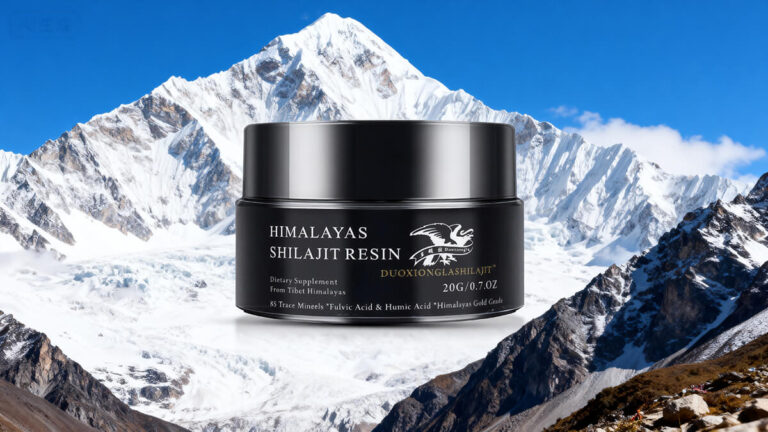
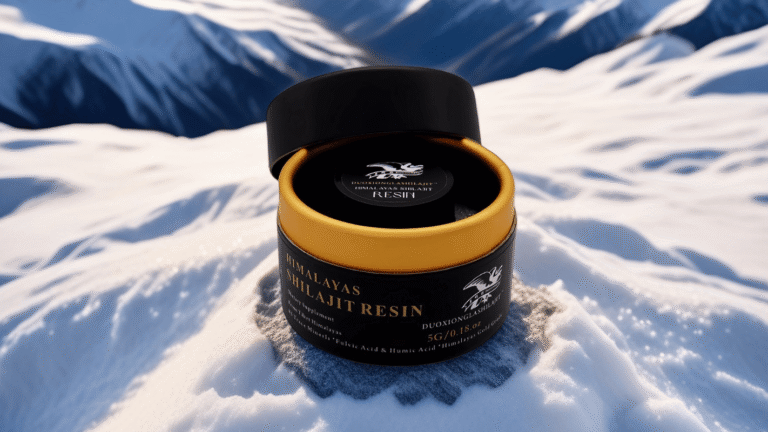
Geology matters. Authentic shilajit is commonly associated with high_altitude mountainous regions. Credible products disclose a specific region, altitude range, and ideally, supplier traceability. Vague, non_verifiable origin lines raise risk. As a neutral example of altitude disclosure, Duoxiongla describes sourcing from high Himalayan elevations of over 17,000 feet on its About page, which is the type of detail buyers should seek in any brand’s sourcing materials (Duoxiongla About; brand FAQ context on resin form: Duoxiongla FAQ). Such claims should still be supported by lot_level documentation.
Purification Process
Raw shilajit is not automatically ready for consumption. Traditional principles (e.g., shodhana) aim to refine raw material, but modern practice should include low_heat purification/filtration and post_purification lab testing to control heavy metals and microbial load. USP microbial considerations for non-sterile oral products reference limits such as TAMC ≤10^3 CFU/g and TYMC ≤10^2 CFU/g, with the absence of specified pathogens when tested per USP <61>/<62>/<1111> (USP 61/62 explainer; Nelson Labs overview).
Third-Party Testing and Mineral/Fulvic Profile
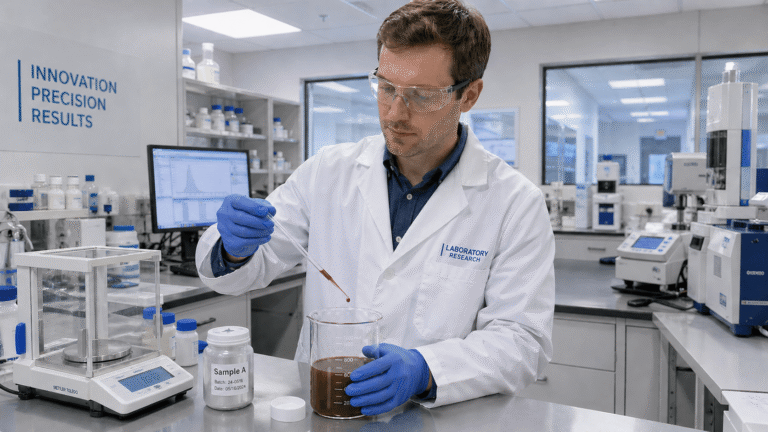
A credible batch COA should name an ISO/IEC 17025_accredited laboratory and list methods: ICP_MS for heavy metals (lead, arsenic, mercury, cadmium), microbial panels per USP<61>/<62>, and fulvic/organic acids via gravimetric assay or validated HPLC/FTIR profiling. Eurofins and SGS operate such services for foods and supplements; accreditation scope pages and service explainers describe ICP_MS capabilities and quality systems (SGS heavy metals testing; Eurofins food testing accreditations overview). Because fulvic percentages can be manipulated by extracted additives, method transparency is critical; current literature recommends multi-method confirmation and acknowledges method variability (fulvic quantification and fingerprinting; gravimetric fulvic quantification example).
How to Test Shilajit at Home Without Relying on Myths
Serious consumer checks can surface early warning signs, but they cannot confirm safety or composition. Practical, limited steps include:
A: Observing dissolution in warm water (uniform color without excessive foaming).
B: Noting texture changes with temperature (soft at warmth, firm when chilled).
C: Inspecting packaging for a tamper seal, and verifying that the label and website specify “shilajit resin” or a defined extract with full ingredients.
D: The decisive step remains requesting a batch COA with accredited methods. Pay more attention to the miner test result. As well as paying attention to the fulvic acid content.
Debunking popular “authenticity tests” :
● Flame/burn tests: Combustion behavior depends on moisture, organics, and additives and reveals nothing about metals or microbes. There is no recognized burn_pattern standard for authenticity. Standards bodies rely on lab analytics such as ICP_MS and USP microbial tests, not flames (see USP <2232>, <61>/<62> references in sections above).
● Alcohol solubility tests: Alcohol dissolution varies with formulation and additives and does not map cleanly to authenticity. Some counterfeits pass such tests while failing metals or fulvic profiling.
● “No foam” or “streak” tests: Surface behavior is easily altered by surfactants or thickeners. These tests are non_standard and unreliable.
● Taste or smell “proof”: Sensory notes are subjective and can be masked. They are not evidence of purity or safety.
What actually works: batch-linked COAs from ISO/IEC 17025_accredited labs showing ICP_MS heavy metals, USP <61>/<62> microbial results, and a fulvic/organic acids profile with named methods. Independent evaluations such as ConsumerLab’s market testing demonstrate why at_home checks cannot detect key risks (ConsumerLab shilajit overview).
Red Flags That Suggest a Product May Be Fake
Persistent vagueness around origin and altitude, generic “Himalayan” or “mineral pitch” claims with no traceability, and a lack of batch_specific COAs are common risk signals. Prices that sit far below the prevailing market band for comparable resin sizes often correspond to dilution or adulteration. Labels that evade clear ingredient naming or present miracle claims step outside responsible advertising practices. Opaque marketplaces with limited return policies enable substitution. Packaging that lacks a batch/lot number, tamper-evident features, or a QR/URL to the COA hinders verification. Any product that hides its actual form (resin, extract ratio, liquid base, or capsule excipients) increases uncertainty.
Why Purification and Sourcing Matter More Than Marketing
Altitude and region influence the raw material, but quality is determined by what happens next. Purification choices—low-heat processing, staged filtration, microbial control—separate shilajit resin from raw pitch. Lab data, not slogans, must support safety. Heavy metal limits for supplements are framed by standards such as USP <2232> (elemental contaminants), with additional context provided by European and WHO references that list exemplar ppm limits for herbal materials; California’s Proposition 65 exposes brands to microgram_per_day calculations in stateside commerce (USP 2232 identifier; EU heavy metal limits explainer; WHO/FAO herbal limits context; Prop 65 NSRLs/MADLs). “Pure” on a label means little without a batch COA that shows metals within acceptable limits, absence of specified pathogens, and a transparent fulvic/organic acids profile with a stated method.
Resin vs Powder vs Capsules: Which Form Makes Counterfeiting Easier
Form factor affects transparency. Resin enables visual and sensory review and is less conducive to undisclosed diluents if the supplier is honest, which is why many buyers prefer it when documentation is available. Powders and capsules obscure composition and can hide excipients, extracts, or non_shilajit fillers. That said, resin is not automatically superior, and capsules are not automatically fake; both can be authentic if batch COAs, GMP manufacturing controls, and labeling clarity are present. Independent category testing has documented large variability in labeled fulvic content and potential exposures, which demonstrates why documentation outranks format differences (independent testing variability).
How to Buy Real Shilajit More Safely
A practical, documentation-first checklist helps reduce risk:
● Find and read the batch COA: It should name an ISO/IEC 17025 accredited laboratory (e.g., Eurofins/SGS), specify ICP_MS for heavy metals (Pb, As, Hg, Cd), include a microbial panel per USP <61>/<62>/<1111>, and report fulvic acids with method (gravimetric or validated HPLC/FTIR). Confirm that the batch/lot number and test date match the product in hand (SGS heavy metals testing explainer; Eurofins accreditation overview; USP 61/62 explainer).
● Check source traceability: Look for disclosure of region and altitude and, ideally, supplier documentation. Examples of altitude disclosure provide context, but still require verification via lot_linked records (Duoxiongla About).
● Evaluate purification statements: Responsible producers explain, at least briefly, how raw material is refined and why the chosen process controls contaminants; they back it with lab data.
● Inspect packaging and traceability: Tamper-evident seal, batch/lot number, storage guidance, and QR/URL linking to the COA are operational hallmarks of a quality-focused brand.
● Align claims with regulations: Avoid products making disease claims or hiding behind vague phrasing. Labels and websites should match and provide complete ingredient transparency (FDA supplements overview; FTC advertising guidance). COA reading micro checklist (fields to verify on each batch document).
● Lab name and ISO/IEC 17025 accreditation (certificate number if listed) and test date.
● Methods: ICP_MS for heavy metals; USP <61>/<62> microbial panel; fulvic acids by gravimetric or validated HPLC/FTIR.
● Results table: Pb, As, Cd, Hg in ppm with detection limits; TAMC/TYMC and absence of specified pathogens; fulvic % with method stated.
● Identity match: Product name, lot/batch code, and serving size that align with the label to enable ppm↔µg/day reasoning.
Is Expensive Shilajit Always Better
Price alone is not proof of authenticity. High pricing can reflect small-batch sourcing, low-yield purification, and rigorous testing. Conversely, extremely low pricing often correlates with dilution, fillers, or inadequate quality control. Instead of price anchoring, compute value in context: price per gram of resin, and—if fulvic % is published—price per milligram of fulvic acids. Because limits like California Proposition 65 may force tighter controls and higher testing costs, sustained ultra_low pricing is a risk signal rather than proof of fraud (Prop 65 context).
How exposure math works in practice: COAs often report metals in parts per million (ppm), while regulations like Prop 65 cite micrograms per day (µg/day). To compare, multiply the product’s ppm by the serving size (in grams) to estimate micrograms per serving (1 ppm = 1 µg/g). This conversion shows why dose and serving size matter as much as concentration; a compliant ppm in a very large serving may still trigger a high daily exposure, and vice versa. Use the COA’s ppm together with the labeled serving size to assess real_world exposure.
Final Verdict: How to Tell Real Shilajit from Fake Shilajit
The most reliable path to distinguishing real shilajit vs fake shilajit is a combination of traceable origin, transparent purification, and batch_specific laboratory documentation from an ISO/IEC 17025_accredited lab. Physical cues such as texture, dissolution, and aroma are informative but non_decisive. Prioritize a COA showing ICP_MS metals within recognized limits, a microbial panel meeting USP criteria, and a fulvic acids profile with a named method. When those elements are present, and the label is precise, the product is far more likely to be authentic and safe.
FAQ
Q1: How can you tell if shilajit is real?
A: Verify a batch-linked Certificate of Analysis from an ISO/IEC 17025 accredited lab listing ICP-MS heavy metals, USP <61>/<62> microbes, and fulvic % by a stated method. Physical cues help, but are not decisive.
Q2: Does real shilajit dissolve completely in water?
A: Authentic resin typically dissolves uniformly in warm water to a brown_gold solution, but clean dissolution does not prove safety. Only accredited lab testing confirms metals, microbes, and composition.
Q3: Is powdered shilajit fake?
A: Not necessarily. Powders and capsules can be authentic if the brand provides batch COAs with accredited lab methods and clear ingredient disclosure. Opaque powders without documentation are higher risk.
Q4: Why does fake shilajit look similar to real resin?
A: Counterfeits blend syrups, gums, or extracts to mimic texture and color. Visual similarity is easy to engineer; authenticity requires traceability and lab documentation.
Q5: What does authentic shilajit smell and taste like?
A: Many authentic resins have an earthy, bituminous aroma and a bitter, savory taste. Sensory impressions vary by source and processing, and cannot confirm purity or safety.
Q6: Can low-quality shilajit still be labeled “pure”?
A: Yes. “Pure” on a label is a claim, not proof. Authenticity requires batch-specific COAs showing metals within limits, absence of specified pathogens, and a transparent fulvic profile with a method.
Q7: Is Himalayan sourcing enough to prove authenticity?
A: No. Geographic claims are starting points. Buyers should expect batch/lot traceability, purification documentation, and third-party lab COAs that verify safety and composition.
Q8: Are lab tests necessary when buying shilajit?
A: Yes, for defensible assurance. Accredited lab COAs (ICP_MS metals, USP microbial panel, fulvic profiling) provide the only reliable evidence of safety and composition; home tests are indicative at best.