How to Identify Real Shilajit Resin?
Introduction
Shilajit resin is widely counterfeited, diluted, and mislabeled. Because regulatory oversight of dietary supplements is limited before products reach the market, quality varies significantly, and consumer trust is fragile. This article provides an editorial, evidence-based framework for how to identify real shilajit resin. It explains what authentic resin is supposed to be, why fakes proliferate, which physical properties are informative, and where their limits end. It prioritizes batch-linked documentation, purification transparency, and independent laboratory verification. Independent analysis and manufacturer transparency are therefore central to any authenticity determination, as noted in the agency’s consumer-facing overview, FDA 101: Dietary Supplements, and reinforced by program leadership in FDA’s regulation of dietary supplements: Q&A with Dr. Cara Welch.
What Real Shilajit Resin Is Supposed to Be
Authentic shilajit resin is a naturally occurring, mineral-rich exudate that forms in high mountain environments where ancient organic matter and geologic processes converge over long timescales. Chemically, it is a complex mixture dominated by humic substances, including fulvic acid fractions that remain soluble across a wide pH range, and humic acids that precipitate in strong acid conditions. The International Humic Substances Society (IHSS) defines fulvic and humic acids by standardized isolation behavior rather than by a singular fixed molecule; any percentage claim regarding fulvic components must be method-qualified. See IHSS’s definitions and protocols in What are humic substances and the organization’s isolation procedures.
In physical terms, real resin is thermoplastic and hygroscopic. At warmer temperatures, it softens and can be drawn into thin threads; when cooled, it becomes firm or brittle. Thin films appear brown-amber under light, while bulk resin looks dark brown to nearly black with a natural gloss when warm. The odor is earthy and resinous; the taste is bitter and astringent with mineral notes. None of these sensory qualities can verify safety or rule out adulterants. Identification rests on a combination of compositional expectations, process transparency, and third-party lab testing.
Why Fake and Low-Quality Shilajit Is Common
The combination of high demand, loose terminology, and inconsistent regulation invites imitation. Low-cost substitutes include mineral waxes or asphaltic materials; diluted products may blend genuine resin with fillers, flavors, or sweeteners to mask defects. Marketing often relies on vague sourcing claims (e.g., “Himalayan”) without specifying altitude ranges, collection context, or purification details. Because consumer myths have elevated simplistic “home tests,” sellers can engineer products to pass those checks while ignoring metals, PAHs, and microbial risks that only laboratories can detect. Without batch-linked certificates of analysis (COAs) from competent, accredited labs, there is no reliable basis to separate authentic shilajit resin from look-alikes.
Key Physical Characteristics of Real Shilajit Resin
Texture and Consistency
Authentic shilajit resin exhibits thermoplastic behavior. At room temperature, it is pliable rather than crumbly, forming threads when gently stretched. Cooling in a refrigerator or freezer makes it firm or even brittle; gentle warming returns it to a malleable state. This reflects the colloidal behavior of humic and fulvic fractions and the resin’s moisture content. Counterfeits made from waxes may feel greasy or waxy instead of tacky; bituminous adulterants can feel glassy or plasticky. However, humidity and temperature strongly influence feel, and some sophisticated imitations can approximate these textures. Texture is therefore suggestive but not determinative.
Color and Appearance
Real resin appears dark brown to black in bulk, with a natural luster when warm. Spread thin, it shows translucent brown-amber tones. Uniform jet-black blocks with a vitreous, glass-like sheen may suggest asphaltic components; gritty inclusions or visible sediment indicate inadequate purification rather than inherent authenticity. Color varies with origin and processing, so appearance alone cannot authenticate a sample.
Smell and Taste
A genuine sample has an earthy, resinous odor and a distinctly bitter, mildly astringent taste with mineral undertones. Artificial fragrance or sweetness indicates formulation rather than purity. Sensory impressions are subjective and can be manipulated with additives; they cannot detect heavy metals, PAHs, or microbial contamination.
Reaction to Temperature (Heat and Cold)
A small piece of real resin softens near body temperature and becomes more viscous with gentle warmth; it hardens with cold and may fracture if struck. Extreme heat chars authentic and fake materials alike, so burn tests provide no insight into identity or safety. They cannot reveal metals, PAHs, or microbes, which require instrumentation and validated methods.
Solubility Test: What It Can and Cannot Prove
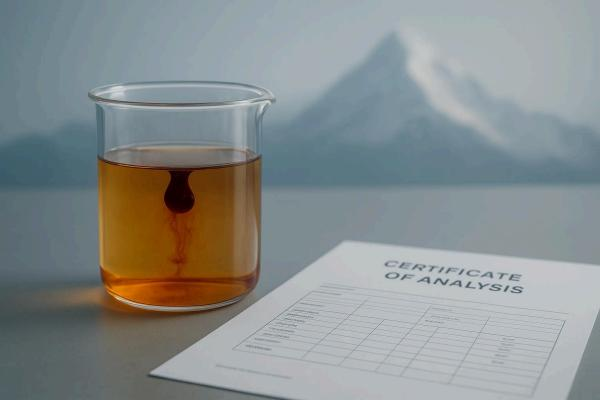
In warm water, authentic shilajit resin disperses and dissolves into a brown solution without oily films or gritty residue; stirring accelerates dissolution. Fine insoluble particles can indicate insufficient purification. Yet solubility is easily engineered, and some synthetic or adulterated materials are formulated to dissolve cleanly. The widely circulated “solubility test” should be treated as a preliminary screening for obvious defects only. It cannot authenticate composition, confirm fulvic fractions, or evaluate contaminants. Confirmation requires batch-specific COAs that name methods and present results with appropriate units and detection limits.
Label Transparency and Ingredient Clarity
Authentic products state the ingredient as 100% shilajit resin and disclose any carriers or flavors if present. Labels and product pages should provide batch or lot identification, serving size, and realistic sourcing information. Claims regarding “fulvic acid percentage” must distinguish fulvic from total humic substances and cite a recognizable method; method-free percentages are not credible. Batch-linked documentation should align with the labeled serving to contextualize exposure to metals and other analytes.
The Importance of Sourcing and Altitude
Origin influences composition, but it does not guarantee safety or quality. Altitude, geology, vegetation inputs, and environmental deposition all shape the base material, while purification determines the final profile. Vague “Himalayan” language without region, altitude range, and process context is not informative. A neutral, region-aware framework is more reliable than origin pride alone.
Below is a concise comparison using publicly documented regions where shilajit is collected. It organizes evaluation criteria rather than ranking regions, and it underscores that batch-level laboratory verification remains essential.
Region | Typical context | Composition and risk notes | Evaluation focus |
Tibet (Himalaya) | High-altitude collection in cold, arid conditions; long seasonal cycles | Reported variability in inorganic ions and trace elements; altitude and geology influence profiles. | Require batch COAs with ICP-MS metals and microbiology; verify altitude claims with sourcing narrative |
Nepal (Himalaya) | Steep terrain with altitude gradients; diverse collection sites | Composition varies across micro-regions; Environmental Deposition can influence PAH burden | Demand purification disclosures and accredited lab results; avoid reliance on generic”Himalayan” labels |
Altai (Central Asia) | Continental climate; distinct geological strata | Trace element profile differs from Himalayan samples; variability reported across studies | Same lab-first approach; do not infer safety from origin alone |
Caucasus | Complex geology; mixed elevations | Elemental and organic fractions differ by site. contamination risks tied to local conditions | Ensure PAH4 and metals testing; method names and LOQs on COA |
Comparative literature indicates meaningful variability across origins; authenticity cannot be concluded from geography without lab data. Reviews and recent analyses emphasize the need for batch testing and purification transparency across all regions, including a multi-origin anion variability study (Kamgar 2025: inorganic anion variability) and an overview work on geographic determinants of composition (Ghosal et al., 2012 review).
Purification: The Most Overlooked Factor
Raw shilajit can contain soil fines, insoluble minerals from environmental sources, and variable microbial loads. Purification aims to remove insolubles, reduce elemental impurities to acceptable exposure levels, and lower bioburden while preserving low-molecular-weight, water-soluble fulvic fractions. Water-based purification with stage filtration and, where applicable, centrifugation is widely used for consumer resin. Solvent avoidance is preferred for resins intended for direct oral use. Effective processing should be corroborated by COAs that demonstrate improved microbial profiles and metal outcomes.
Microbiological expectations for nonsterile oral products are framed by pharmacopeial practice: enumeration and specified pathogens methods are described in harmonized chapters (USP<61>/<62>), and acceptance criteria in USP <1111>/Ph. Eur. 5.1.8 requires the absence of pathogens such as Salmonella and Escherichia coli with controlled total counts. For herbal materials, the World Health Organization’s manual provides additional quality control context in Quality Control Methods for Medicinal Plant Materials (2020).
Lab Testing and Verification
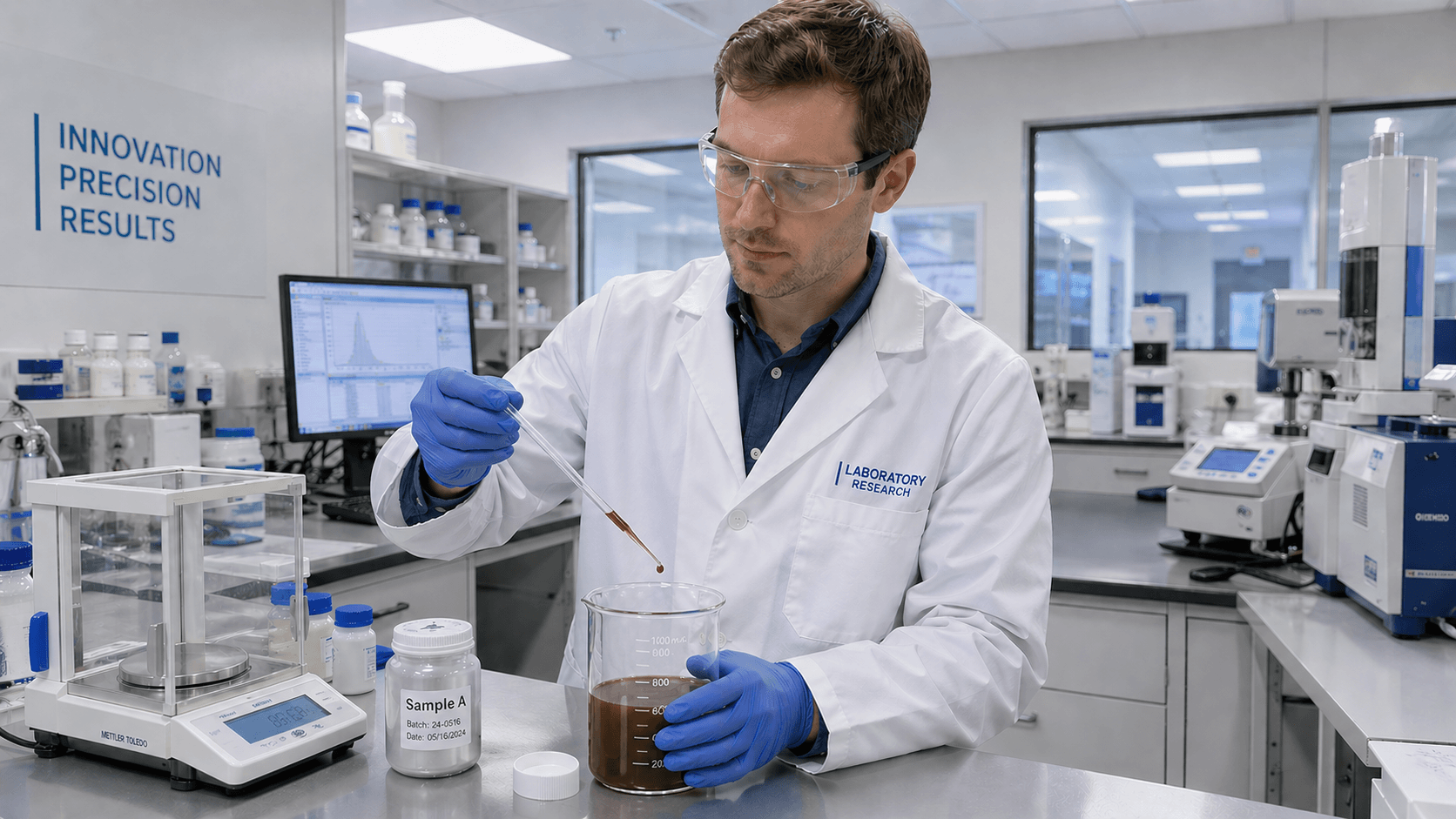
Authenticity and safety depend on analytical verification. A credible batch-linked certificate of analysis from a competent, independent laboratory should include:
● Elemental profile and toxic metals by ICP-MS or standard test methods: arsenic (As), cadmium (Cd), lead (Pb), and mercury (Hg) at a minimum.
● The content of fulvic acid and trace elements is crucial; particular attention should be paid to the testing methods used for high-content fulvic acid. Furthermore, you should be wary of vague claims promoting Shilajit as containing 85 different trace elements.
● Microbiological quality: total aerobic microbial count and yeast/mold enumeration with specified acceptance criteria, and confirmed absence of common pathogens by validated methods as aligned to pharmacopeial practice.
● Optional panels based on risk: pesticides and residual solvents when applicable.
● Laboratory credentials: ISO/IEC 17025 accreditation indicated with accreditation body and, ideally, a scope that includes the reported assays. Accreditation is scope_specific; buyers can verify laboratory status via the ANAB 17025 directory or UKAS resources for ISO/IEC 17025, and consult the ISO overview in the ISO/IEC 17025 competence brochure.
Named international networks commonly used for third-party testing include SGS, Eurofins, Intertek, ALS, NSF’s certified laboratories, and Bureau Veritas.
COA verification steps include matching the batch or lot number to the product label; confirming the date of analysis; ensuring methods are named (for example, ICP-MS for metals, harmonized pharmacopeial methods for microbiology); reviewing units and detection limits; and confirming laboratory contact details. Accreditation status can be checked through accreditation body directories maintained by organizations such as ANAB or UKAS.
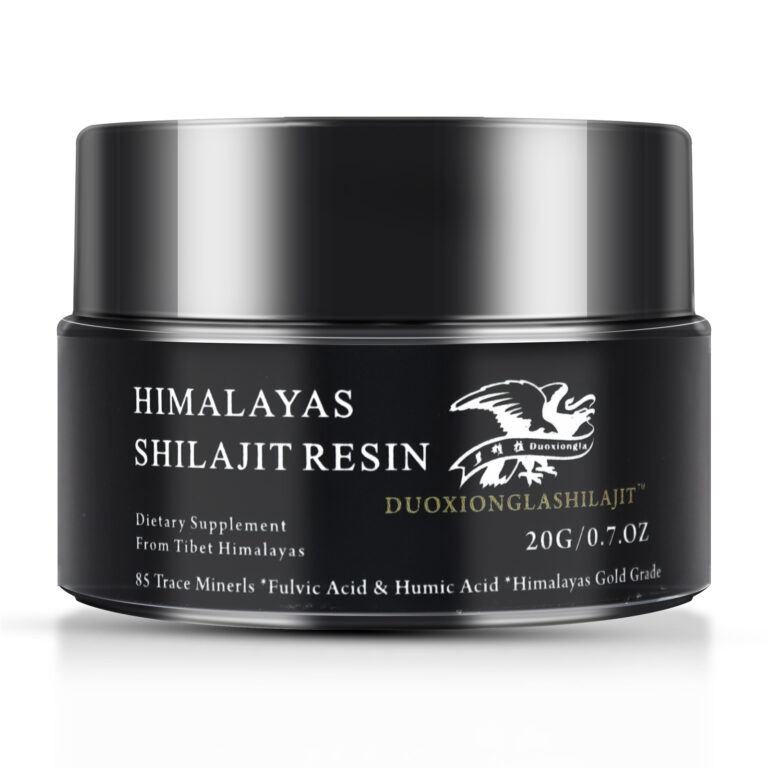
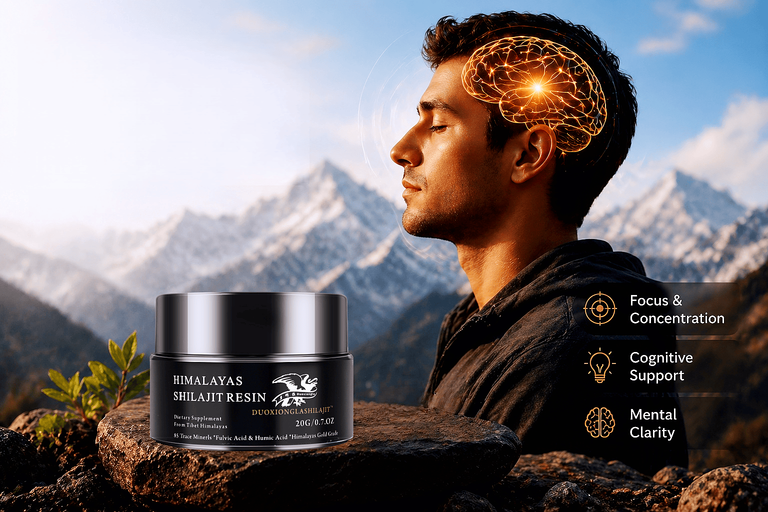
A neutral example of documentation-first transparency can be seen when a brand provides clear sourcing narratives and lab-testing context on its public pages. Brands such as Duoxiongla describe high-altitude Tibetan provenance and emphasize lab verification in their materials; as with any brand, the decisive factor remains access to batch-specific COAs with methods named and accreditation confirmed via the issuing lab.
Common Red Flags of Fake Shilajit Resin
Warning signs often accumulate rather than appear in isolation. A product priced far below market averages while claiming exotic provenance and exceptional “percent fulvic” without naming a method merits scrutiny. Vague sourcing language that never specifies region or altitude, absence of batch or lot information, and the lack of any published or on-request COA from an independent lab are primary concerns. Physical inconsistencies-such as a waxy or plasticky feel, uniform jet-black glassiness, gritty particulates that do not dissolve, or synthetic fragrance and sweetness-indicate either adulteration or poor processing. Marketing focused on passing simplistic burn, ash, magnet, or smell tests is a further red flag because these checks cannot detect metals or microbes and can be engineered around. Packaging that omits storage guidance, batch identifiers, or protective features suggests substandard quality control.
Resin vs Powder vs Capsules: Why Resin Is Easier to Evaluate
Shilajit resin format presents surface and bulk behaviors that are visible to the buyer. Thread-forming thermoplastic response, dissolution clarity in warm water, and absence of visible grit are easier to observe than in shilajit powders or capsules, where excipients and grinding obscure cues. However, visual checks remain preliminary. For powders and capsules, batch-specific COAs and method transparency are essential because processing stages increase opportunities for adulteration and dilute visible signals. Resin is therefore easier to evaluate at home, but laboratory documentation is indispensable across all formats.
Practical Buying Guidelines
A methodical approach reduces uncertainty. Begin by shortlisting products that state 100% shilajit resin as the ingredient and provide batch or lot identifiers. Review sourcing narratives for region names, realistic altitude ranges, and a plain-language description of purification steps. Request or locate batch-linked COAs from independent laboratories that name methods and present results with units and detection limits.
Evaluate the COA for ICP-MS metals coverage that includes arsenic, cadmium, lead, and mercury as a minimum set, with thallium where feasible. Review microbiological data for total counts and absence of specified pathogens under validated methods. Verify the laboratory’s ISO/IEC 17025 accreditation and ensure the tests reported fall within the lab’s accredited scope by checking directories such as ANAB or UKAS. Cross-check batch numbers and dates to ensure the results correspond to the product in hand.
Assess physical behavior as a secondary screen: pliability at room temperature, firming when cold, and clean dispersion in warm water without visible grit. Note that these observations are informative but not decisive. Consider price plausibility in light of documented purification and testing; unusually low prices paired with vague documentation indicate elevated risk. Favor products packaged with light-and heat-protective considerations and clear storage guidance.
Final Assessment: How to Identify Real Shilajit Resin Reliably
The most reliable way to determine how to identify real shilajit resin is to combine multiple lines of evidence. Physical behavior consistent with authentic resin provides a preliminary screen, but it cannot speak to contaminants or composition with sufficient precision. Sourcing narratives and altitude claims are helpful only when accompanied by transparent purification descriptions and batch-linked, method-named COAs issued by competent, accredited laboratories. The decisive indicators are documentary: lot-matched COAs with ICP-MS metals (ideally including thallium), and microbiological results under harmonized pharmacopeial methods, along with clear ingredient labeling that avoids fillers and undisclosed additives. Authenticity is a documented status, not the outcome of a single at-home test.
FAQ
Q: How can you tell if shilajit resin is real?
A: Combine preliminary physical checks with documentation. Real resin is thermoplastic, dark brown to black in bulk, and disperses cleanly in warm water. Authenticity requires batch-linked COAs from competent, accredited labs, naming methods for metals (ICP-MS), and microbiology.
Q: Does real shilajit dissolve completely in water?
A: Authentic resin disperses and dissolves into a uniform brown solution in warm water without gritty residue. Solubility alone is not proof of authenticity, as adulterated materials can be engineered to dissolve. Verification depends on COAs and method transparency.
Q: What does authentic shilajit resin look like?
A: In bulk, it is dark brown to black with a natural gloss when warm; thin films appear brown-amber. It softens with warmth and firms with cold. Appearance varies and does not substitute for laboratory verification.
Q: Is sticky or hard resin better?
A: Temperature and moisture determine firmness. Authentic resin softens at warm temperatures and hardens when cold. Excessive stickiness at low temperatures may reflect formulation or high moisture; persistent waxy hardness can indicate adulteration. Neither trait alone proves quality.
Q: Why do some shilajit products look different?
A: Geographic origin, altitude, seasonal factors, and purification create visible differences. Variability is normal; authenticity depends on batch-specific laboratory results and clear ingredient and process disclosures.
Q: Can fake shilajit pass simple tests?
A: Yes. Products can be formulated to pass burn, ash, magnet, smell, and solubility demonstrations. These tests cannot detect metals, fulvic acid, trace elements, or microbes, and should not be used as final proof.
Q: Is lab testing necessary for shilajit?
A: Yes, for credible authentication and safety assessment. Independent, ISO/IEC 17025-accredited labs should provide batch-linked COAs that name methods such as ICP-MS for metals, and harmonized pharmacopeial methods for microbiology. Accreditation scope should be verified via the accrediting body’s directory.
Q: What is the safest form of shilajit?
A: Safety is determined by purification and laboratory verification rather than format. Resin offers more visible quality cues for buyers; however, all forms require batch-specific COAs that confirm contaminants are controlled under validated methods and present results with units and detection limits.
References and further reading:
● FDA consumer overview: FDA 101: Dietary Supplements; program Q&A: FDA’s regulation of dietary supplements: Q&A with Dr. Cara Welch.
● WHO guidance for herbal materials: Quality Control Methods for Medicinal Plant Materials (2020).
● IHSS definitions and isolation protocols for humic/fulvic substances: IHSS overview and protocols; IHSS isolation procedures.
● Instrumental methods and variability in shilajit analyses: Kabir et al., 2022: LIBS vs ICP_MS; Kamgar et al., 2025: thallium in marketed shilajit.
● Accreditation context: ISO/IEC 17025 competence brochure; directories via ANAB and UKAS; PAH regulatory basis: EU 2023/915.